Sunday, 31 October 2010

Week 32 - Nearly Ninety; A Week in December

Nearly Ninety was created in the last year of choreographer's Merce Cunningham life before he died in summer 2009. Cunningham is probably the best known American avant garde representative and in his long career he influenced not only the dance world, but a wider culture as well. In his performances dance, music and design all play an equal role on the stage. His last work has all the trademarks of creativity and the name mirrors it (he died nearly ninety). Rigid moves, ballet-like leaps and inorganic relations mix with industrial sounds. I didn't enjoy it but didn't dislike it either – it left an indescribable emotion. 
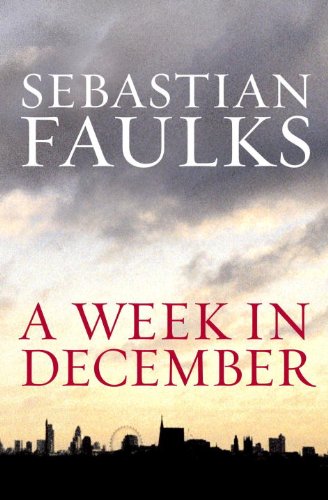
At the monthly book club we discussed A Week in December by Sebastian Faulks. It is a Dickensian novel set in the current day London tracking the intertwined lives of numerous characters. In fact, there are so many characters with back stories, that not much space was left for the action. It is a true 'state of the nation' novel in to which an immense amount of research went in. The book contains detailed descriptions of how the Tube works, of the financial procedures in banks and hedge funds and drug industry among other things. A major fault, however, is the authors decision to invent new names for the items we take for granted and many places in London – Costa café becomes Café Bravo, MySpace – YourPlace, everyone listens to Girls from Behind, not Girls Aloud, etc. What is the point of it?

Also this week: listened to Baroque arias performed by Europa Galante at the Barbican and visited the magnificent Cadogan Hall where Vanbrugh String Quartet performed Beethoven's string quartets and yet again went to the most educating and inspiring guided tour of the National Gallery (everyday 11.30 or 2.30 – highly recommended!).  

Sunday, 24 October 2010

Week 31 - Onassis; Men Should Weep

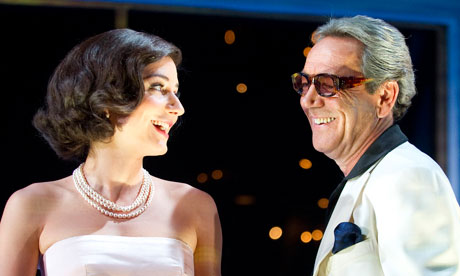
The life of Aristotle Onassis contains all the elements for a gripping play – a larger than life personality, famous lovers (Maria Callas and Jackie O), glamour and money, tragedy (many members of the family died in plane crashes, etc.) and a thriller twist (did Onassis pay for the assassination of R. Kennedy?). However, the just opened Onassis in the Novello theatre is a flop and a great performance by Robert Lindsay does not save it. Most of the action is narrated by Aristo's friend and business partner Kosta, but one does not want to be told what happened, one wants to see it on the stage. And that together with the flowery language of other characters left me longing for the end.

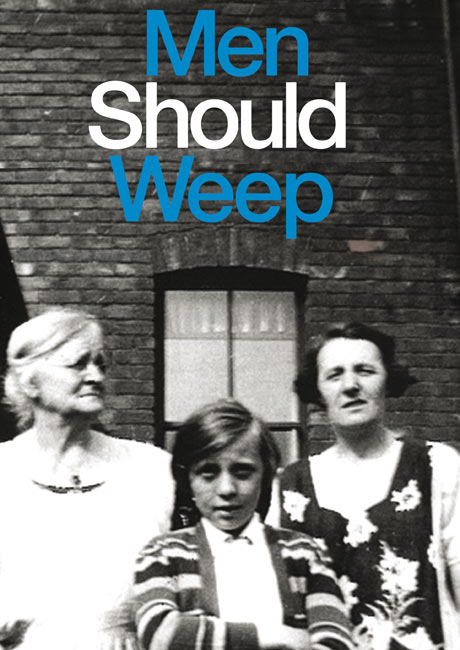
I will remember Men Should Weep at the National for two reasons – one of a great show and another of the ignorance and, ehem, stupidity of some people. The premise is simple – a very poor Glaswegian family in the 1930s depression, where men are looking for jobs and women are left holding the family together. The main character Maggie struggles to cope with her children's problems, with nosey neighbours and the mess in the flat. But along with all the poverty and hardship, there is hope, humour and a fabulously extravagant stage set. Since the play is set in Glasgow, the accents were really strong and it took a while to fully comprehend. At the interval a woman next to me asked if I am Scottish, because she was amazed I could follow the plot. But the top gag of the evening was being whispered behind me. An overheard conversation by two respected-age English ladies: 'I just don't understand why do they have to speak Scottish. We are in London, so they should speak English or at least have the subtitles'. I could not believe my ears.

Also this week: enjoyed Design for Living at the Old Vic with splendid sets.

Sunday, 17 October 2010

Week 30 - The Double Issue

Do you know that special feeling when you start a book and from the first page you are absorbed and know that every page will be fantastic and the more you read the better it gets? You want to get lost in that world, for the book never to end. The book has everything you most value and most enjoy. Oh, that is the best feeling in the world and I haven't experienced it for a long time. But the wait was over last week as Amsterdam by Ian McEwan consumed my total attention for few days. The story is about a true friendship of two men – a composer and a newspaper editor. The author provides a wealth of background information on how things work in an orchestra and a daily's office, which added an enormous amount of pleasure to the clean language and brilliant observations of today's world. I was tired of reading average books and so Amsterdam was pure satisfaction.

One of the last Arthur Miller's play Broken Glass just opened at the Tricycle. It's a fantastic production with brilliant acting, especially by Anthony Sher. He is a respected businessman whose wife's legs suddenly get paralysed after she sees reports of Kristallnacht (this is 1938). As the play goes on, we discover that there might be another reason and not all is good under the calm facade of their marriage. As it is typical to Miller, there is a lot of humour and analysis of being a Jew in his play. But above all, we witness the pain an enormous love can bring to people.

Broken Glass was the best of the five performances I saw last week. The rest were mostly dreadful. Whilst waiting for the end, I fell asleep during Danton's Death at the National. A false blessing that there was no interval – not a long play, but I could have left on the break.

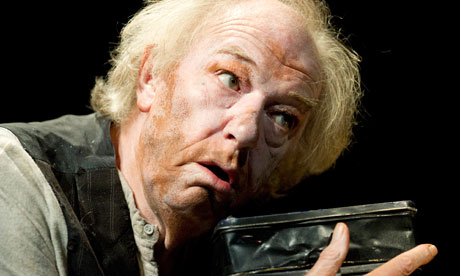
Krapp's Last Tape – allegedly Beckett's masterpiece with Britain's best living actor Micheal Gambon. It was another 50 minutes of torment. The recorded text wasn't very clear and jokes with banana as a penis were just cheap... As the playwright John Osborne rightly suggested – Tape's Last Krapp...

A little better was TEOREMAT from TR Warszawa (I saw their 4.48 Psychosis in March) at the Barbican. A theatrical revamp of the 1960s Italian film Teorema about a stiff family whose ordered daily life is distracted by an exciting stranger turning up at the door one day. The production had smart styling, interesting ideas, bare staging and good acting. However, it was way too long and the poetic moral in the end lost me.

Also this week I disliked Handel's opera Radamisto at the English National Opera. Why? Handel's music isn't my cup of tea, but I gave it a try. It is quite simplistic, the plot in the opera is silly and the decision to put one of the characters into a fat suit totally ruined it for me. I couldn't stand the distracting comical element that the fat suit provided.

All in all, a super busy week, but only few gems. 

Sunday, 10 October 2010

Week 29 - Enlightenment; Blood and Gifts

The Hampstead Theatre just started its first season under the new artistic director Edward Hall with Enlightenment written by Shelag Stephenson. This season is meant to turn around the fortunes of the theatre which in the last few years lost it's track (not difficult to do that after grandees like Mike Leigh and Harold Pinter worked in the glory years). And what a weak start Enlightenment is! The story is intriguing enough – Adam has gone missing on his gap year travels, his middle class parents are in agony until he returns with memory loss. It turns out that the returnee is not their son and a pile of lies unfold while we find out what happened to the real Adam. However, it is ruined by flat acting (a wife slaps her husband and he just goes on talking – no reaction at all), clichéd characters (a psychic for humour element, an over enthusiastic and slightly dumb TV producer, a swearing former Labour minister) and fatigued moral message (we are good only when it suits us). Hopefully the season will get better once Mike Leigh comes back to direct Ecstasy in March.

The National yet again did not disappoint. Blood and Gifts by J T Rogers was a perfect political thriller. A young and eager CIA agent is sent to Pakistan to help the Afghans to fight the Soviets in 1981. Through his story the audience get to see the corruption of the Pakistani army chiefs, the humanity of the Soviet ambassador, the British inability in the special relation and the motives of the Afghan war lords. The play explains what happened in the ten years war that exposed the weakness and lead to the ruin of the Soviet Empire. Blood and Gifts is brilliant because we see many allusions to today's fight and the main character's personal story is interlinked with the happenings in the world.

Also this week: finished The English Patient by Michael Ondaatje, enjoyed a super educational and inspiring tour of the National Gallery (daily at 11.30 and 2.30 – can't recommend enough!) and watched a dance performance Monger by Barak Marshall at the Barbican.

Sunday, 3 October 2010

Week 28 - War Horse; Or You Could Kiss Me

Before I packed up my suitcases for Malaga's sunshine, a long held dream came true: saw War Horse , a hugely successful play about a boy looking for his beloved horse during WWI. It is produced by the Handspring Puppet Company, who made fantastic puppets of geese, horses and soldiers. The puppets were amazing, but only that long one can admire them, as the story was slow and predictable with dreadful overacting. I found the puppets of humans rather scary.

That leads to another play by the same company, just previewed at the National, Or You Could Kiss Me. It is a story of a gay couple in old age reminiscing of their youth in the 1970s South Africa. in the present, they are bickering at each other, in the past - being shy and afraid even to kiss. However, in the end we do not find out why their relationship is so bitter. The puppets were scary and the puppeteers were particularly distracting. The play was constantly interrupted by the 'story teller', who controlled the plot and acted all supporting roles. As the end approached, I was wondering if there is anything I liked about this play. The answer: not a single thing.

Also this week: The Slap by Christos Tsiolkas divided us the monthly book club - for some it is an engaging society portrait, so other - a predictable unworthy read. Also, indulged myself in the Mediterranean sun and Malaga's old town.

Monday, 27 September 2010

Week 27 - LSO Season Opening Weekend

R.Shchedrin and M.Plisetskaya
My summer was really quiet in the classical music front, so you can imagine my excitement about the London Symphony Orchestra season opening weekend. The principal conductor Valery Gergiev selected Rodion Shchedrin's music as the background for the 2010/11 season and the opening concerts were full of his eclectic music. The atmosphere at the Barbican Hall was charged with anticipation as both concerts were practically sold out. The programme note informed us that the composer is in the audience and we quickly spotted him with his legendary wife – Maya Plisetskaya. She is a super famous Prima ballerina from the Soviet times and I remember as a child seeing her dancing on the television. The fact that this couple were amongst us enjoying the performance made it so much more special.

Anyway, to the actual music. The orchestra was at its best! They played Carmen Suite – a whole opera contrived to an hour long ballet. That was great, as you get the best tunes, only updated (Shchedrin finished it in 1967). After that we could compare the composer's progress, as Denis Matsuev delivered Piano Concerto No 5 from 1999. Not my cup of tea – for me, classical music ends in the seventies... Nevertheless, a standing ovation greeted the humble composer as he came onto the stage. The evening ended with Pictures from an Exhibition, which I wanted to hear for a long time, but only the last movement was memorable (gorgeous is the word).

On Sunday, Concerto for Orchestra No 1 was almost pop music – so jazzy, so catchy. I strongly recommend to check it out on Spotify. And then – an extra long (at least it felt that way) Mahler's Symphony No 5, although first movement caught my emotion with its heavy and grim funereal tread. All in all, the weekend was wonderful and set the tone high for the coming winter with the LSO.

Also this week: watched Shutter Island and loved its soundtrack. 

Monday, 20 September 2010

Week 26 - Floating; Jaadu

The Barbican is showing a trilogy of plays by Hugh Hughes. Two weeks ago I saw 360 and last week went to see Floating. Hugh Hughes is a character created by Shôn Dale-Jones and produced by Hoipolloi. Hugh Hughes is a storyteller with tales inspired by his family and his Welsh connections. He invites the audience to an imaginative world where islands travel around the Atlantic and grumpy bosses in London forces one to travel to Snowdon to refresh the mind. Whereas 360 was just Hugh standing on the stage and let our imaginations working, in Floating Hugh had a helper and lots of decorations. I enjoyed the first play without any multimedia distractions – there are too many screens and monitors as it is in our lives.

Jaadu with Titi Robyn and Faiz Ali Faiz provided us with an overwhelming evening at the Barbican at Saturday's Transcender series. A French guitarist and Qawwali singer from Pakistan fused Western and Eastern into one and managed to create something indescribable. I didn't want the evening to end.

Can't wait for next week - the LSO season opening concert at the weekend.

Sunday, 12 September 2010

Week 25 - Punk Rock; Wanderlust; Clybourne Park

A super busy week in the cultural fields of London, but very exciting! It started with a revival of Simon Stephens's Punk Rock at the Hammersmith Lyric. It's a school drama about teenagers – allegedly one of the best plays of 2009, but left me angry and disappointed. No way these kids would hang out together in real life and use that sort of language. It's not worth describing much, just to say that I couldn't wait for the end.

A very different experience at the Royal Court, where they are showing Wanderlust and Clybourne Park. The Royal Court never lets you down and both these plays are simply fantastic. Upstairs in Wanderlust a married couple is having problems with their sex life – a woman wants tenderness and love whereas a man is hungry for sex. A simple traditional story, but it is told in the incredibly funny way by Nick Payne. I saw his previous play at the Bush, which was promising, and with Wanderlust Payne has proved himself as a brilliant young playwright.

Clybourne Park downstairs sparks fireworks. It is also very funny, but in here we laugh at the racism and political correctness. The play is divided into two parts. A couple in white neighbourhood sells their house to a black couple in the 1950s. That causes an outrage between neighbours and we witness their worries how the sale devalues their properties. In the second half the tables have turned and the same house now is being bought by a white couple and the neighbourhood is predominantly black. It's 2009, so there is a lot of politeness and talk about holidays until they open the can of worms and start accusing each other being racists. It's all rather delicious, although the fact that most is what people think is a bit worrying.

Also this week: at the Barbican saw 360, a very sweet play about imagination by Hugh Hughes, and visited Saatchi gallery to examine new emerging British art at the Newspeak exhibition.  

Sunday, 5 September 2010

Week 24 - Secret Cinema

Some unprofessional pictures
from Secret Cinema

After a long wait Secret Cinema arrived! It built up the excitement by sending emails telling what to wear, where to come and what to bring. The attire to be Arabic and cushions to be brought, so we figured out the film would be Lawrence of Arabia. Meeting at 4pm on Saturday at Alexandra Palace. Around the station hundreds of cinema goers dressed as Arabs gathered and we proceeded towards the palace. Along the path market hagglers, soldiers and musicians greeted us. There were sheep, horses, even camels. The atmosphere was charged with excitement and amazement. We couldn't believe how much was invested and how authentic everything appeared. Dangerous looking men with ammunition belts round their waists ordered the crowd (probably ~2000 people) into the palace, which was transformed into the British colonial headquarters. You could purchase a thousand camels, play billiard with soldiers, send a telegram to London or play cards with business men.

Enter another hall and you are in a vibrant Arabic town with market selling cockroaches and leather shoes, tea cafés and drink parlours. There was even a beach! We were simply taken aback! In the third hall was a massive screen with places to lay out your blankets, sit on cushions and enjoy the movie. Until this point everything seemed like the best day out possible! But it was only 5.30 and the movie wasn't starting. After two and a half hours sitting on the floor one had either to get drunk or possess unlimited patience. After the amazing start the curve of pleasure was heading south rapidly. It was a canny way to make loads of money, as there were never ending queues for food and drink (what else could one do for nearly three hours!). Anyway, once the film started it should have been a bliss again, as Lawrence of Arabia is considered one of the best films of all times. However, there were serious issues at the sound engineer's desk – it was so loud it was tricky to understand what the characters were saying. LOA is the longest movie winning the Oscar (222min) so we had to leave at the intermission, as our ears started to hurt.

All in all, Secret Cinema disappointed me. It seems they overexpanded and overgrew loosing the intimacy and secrecy.

Also this week: was frozen to the bone at the Scoop watching Don Juan in Love under the stars and visited Magnificent Maps at the British Library and discussed Murder on the Orient Express at the monthly book club.

P.S. Sorry for disobeying my 300 words rule this week – too much to say!

Monday, 30 August 2010

Week 23

The Museum of London invested over £20 million to the new Galleries of Modern London, which I visited this rainy weekend. Anyone in love with London would love this museum, as it documents the life in the city from pre-history until our days. However, I find the Museum of London too Disneylandish. Hundreds of interactive displays, videos with actors dressed in period costume, etc. are great for children, but for adults the depth of information is missing and genuine objects put in pretend display cases loose their authenticity. The biggest mistake is to visit on Sunday – way too many families and lost tourists.

One of the most amazing concert venues in London – 1901 Arts Club – is a house in Waterloo, beautifully restored and kept to the period standard. Inspired by Europe's Salon culture, the Club is perfect for chamber music performances. Before the show you can enjoy a drink on the roof terrace spotting the trains zooming past you to Waterloo. In the season opening concert the Spanish mezzo soprano Nerea Berraondo and pianist Juan Urdániz presented a recital of Spanish and Argentinian songs. The mixture of subjects (love, humour, animals) in these folk songs allowed Berraondo to show not only her voice but also her performing skills.


This week I also read a humorous short novel by David Lodge. The British Museum is Falling is a story set in one day about a research student, who spends his day thinking about his numerous problems (3 children, a possible fourth on the way, his Catholic beliefs and unfinished thesis) and encountering many adventures. The book feels slightly dated as it was written in 1960s and many issues are not important for the present day reader. Nevertheless, it's a great test on one's literature knowledge as each chapter is an allusion to various writers' styles and motifs.